Easing the mental load of well-being professionals
In the daily lives of yoga teachers, coaches and well-being professionals, passion often takes up all the space… sometimes at the expense of personal balance.
Between classes, messages, administrative work, communication and business management, mental load gradually sets in — often in an invisible way.
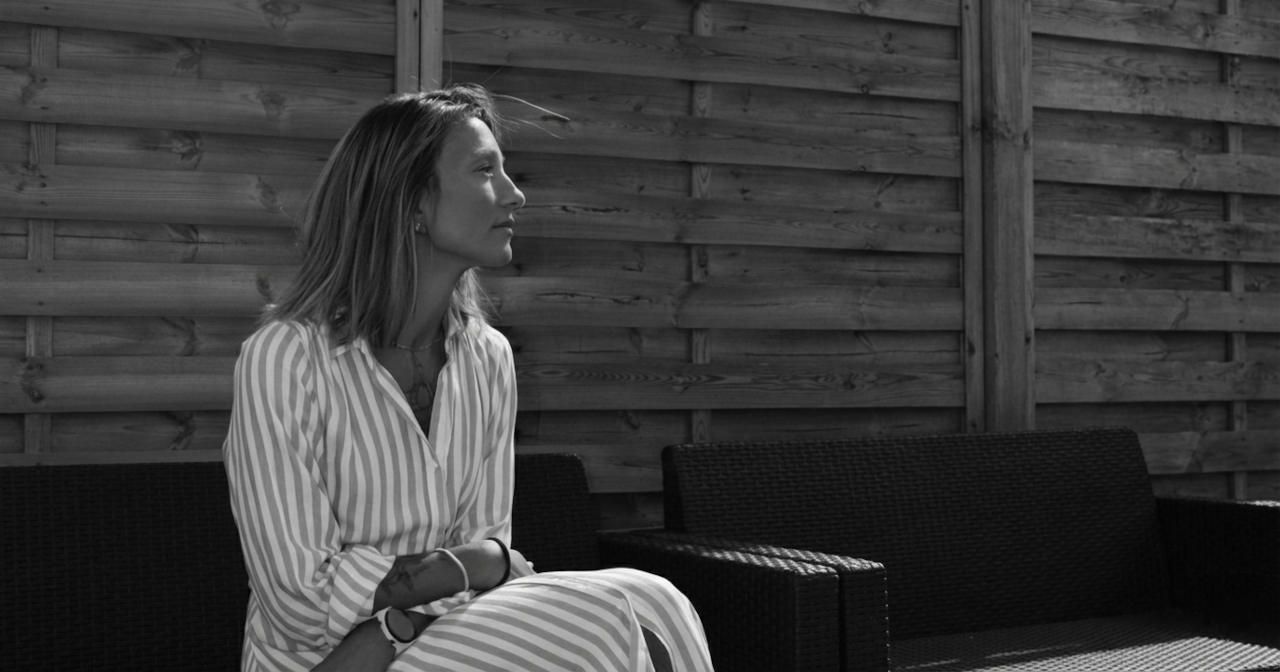
It is in response to these realities that we wanted to give the floor to Sonya Leroux, founder of Simply’Assist, an emotional and organisational support practitioner for professionals in sport, yoga and well-being.
Through this interview, Sonya shares with great clarity her vision of “slow business”, her human-centred approach to organisation, and the keys she observes in the field to help professionals regain clarity, serenity and breathing space in their daily lives.
Interview with Sonya Leroux, founder of Simply’Assist
1. To begin, could you introduce yourself and tell us what led you to create Simply’Assist?
My name is Sonya, an emotional and organisational support practitioner for professionals in sport, yoga and well-being.
I have an atypical professional background, but one that has always been centred on people.
I worked in social support, more specifically in child protection, before reinventing myself along a more creative path aligned with my vision of slow business.
At the same time, sport and nature have always been my breathing spaces: trail running, triathlon, hiking, yoga… These are moments that help me ground myself and gain perspective on daily life.
One day, I realised that what sport had taught me — listening to your rhythm, respecting your energy, moving forward step by step — was exactly what the well-being entrepreneurs I met needed: they were passionate, but often exhausted, overwhelmed and scattered.
That’s how Simply’Assist was born: an activity that reflects who I am, where we bring softness back into organisation, breathing space into daily life, and put people back at the centre. I wanted to create a supportive bubble, because entrepreneurs, even when surrounded, can feel alone when facing their invisible load.

2. You work very closely with well-being and sport professionals. What immediately touched you or made you want to support them specifically?
Because I deeply understand them.
I know what it’s like to have great sensitivity, a calling focused on helping others, and at the same time an activity that requires a lot of energy, presence and management.
Coaches, therapists, yoga teachers, well-being studios… are so committed to their mission that they sometimes forget themselves.
They also carry an additional pressure: that of embodying “zen” professionals at all times, when above all, they are human beings.
They are passionate people who give a lot.
And I really wanted to be the person who looks after them while they look after others.
3. We often talk about “mental load” in this sector. Concretely, what forms does it take for coaches, yoga teachers or well-being entrepreneurs?
It can take many forms:
- messages from students at all hours,
- unstable schedules with last-minute cancellations,
- juggling classes, social media communication and administrative tasks,
- difficulty saying no,
- financial pressure.
This is what I call the invisible load. Most of the time, they don’t even realise it anymore.
I also often notice that there are no clear boundaries between personal and professional life, especially for professionals who practise from home.
4. What difficulties or blockages do you observe most often in their day-to-day organisation?
Dispersion, communication issues and a lack of structure are the main difficulties I observe in their professional organisation, which ultimately leads to mental fatigue.
5. Many feel they “have to do everything themselves”. What impact can this have on their energy, creativity, or even their way of teaching?
This belief that everything must be done alone inevitably leads to a loss of energy, less creativity, sometimes discouragement and burnout.
Some also begin to question their profession and may develop a desire to give up.
I also often see professionals stepping away from social media for a while due to algorithm pressure (always more posts for more visibility). They enter a vicious cycle that fuels a real loss of meaning.
6. How does a collaboration with you usually work?
It’s very simple — and above all very human.
We start with a discovery call where we talk about what feels heavy, what blocks, what is missing.
Then we clarify needs together, without judgement.
After that, I support on two levels:
- emotional support (listening, soothing, refocusing) & gentle organisation (structuring, simplifying, prioritising),
- moving forward in small steps to create a more fluid daily life. I take charge of concrete actions to bring real breathing space.
I’m present through voice messages, texts, mini-missions and follow-ups.
It’s a form of support that feels more like a partnership than a service. I really insist on this point: I’m not an executor, but a support.
7. You use several digital tools (Notion, Trello, …). Which ones simplify life the most for the professionals you support, and why?
Calendly, Google Drive, Notion.
I use what is most relevant for them, not what is “trendy”. A tool can be intuitive for one person and not for another.
Sometimes, a simple notebook is more than enough.
8. How do you find the balance between efficiency, structure and gentleness in your support?
Through my professional and personal experience, I place the human relationship at the heart of my support. It’s a balance between active listening, presence, kindness and simple yet solid structure.
I deeply believe that you can be organised without exhausting yourself, that you can build a business at your own pace without losing who you are.
This balance is what makes my support unique.
9. You recently created a questionnaire to better understand the organisational needs of sport and well-being professionals. What do you hope to discover or validate through this approach?
I want to understand their difficulties, their needs, their seasons and their rhythms.
My goal is to refine my support so that it becomes even more precise and useful.
10. From your experience, what would be the first two or three simple habits a yoga teacher or coach could adopt to regain serenity in their management?
The first habit is to have a fixed weekly check-in.
For example: taking 30 minutes every Monday to organise the week. It changes everything.
Then, defining one to three priorities per day — no more.
This immediately reduces mental load.
The goal of these two habits is to avoid dispersion and to work with greater serenity.
And all of this can be done very simply, with a small notebook.
11. If you had one myth to debunk or one essential message to share with well-being entrepreneurs, what would it be?
In the well-being world, you’re supposed to manage everything alone because it’s a calling. That’s false.
I believe that having support takes nothing away from passion — on the contrary, it preserves it.
A business that thrives starts with a professional who feels well.
12. What inspires you most in this support-based profession, and what impact would you like to leave in the lives of the professionals you support?
Transformation, perspective and relief.
There’s nothing more moving than a professional who feels heard and soothed.
13. Finally, where can people follow you and how can sport and well-being professionals contact you if they want organisational and emotional support?
You can follow me on Instagram: @simplyassist76
And on LinkedIn: Sonya Leroux – Organisation & Emotional Support Practitioner
For more information, visit my website: simplyassist.fr
Conclusion
Through her support, Sonya shows that it is possible to reconcile passion, structure and humanity. Her perspective invites us to slow down, to organise without exhausting ourselves, and to view organisation as genuine support in service of passion — not the other way around.
A heartfelt thank you to Sonya Leroux for the quality of her answers, her sincerity, and the valuable perspective she brings to the daily lives of well-being professionals.
If her approach resonates with your own experience, you can discover her work and support on simplyassist.fr, or follow her on Instagram and LinkedIn.

Comments